A Wendy’s Big Classic carries 550 calories, 27 grams of fat, and 1,300 milligrams of sodium before a single fry hits the bag. A Burger King grilled chicken sandwich, marketed as the lighter option, still lands at 510 calories and 1,180 milligrams of sodium — more than half a day’s recommended limit in one sandwich. Add the fries and a drink, and a fifteen-minute lunch run turns into close to a full day’s sodium allowance eaten in one sitting.
Both sandwiches also carry trans fat, the kind nutrition labels now flag by law because of how directly it’s tied to heart disease — a Big Classic lists 1.5 grams, a number that sounds small until it’s stacked against a body that needs none.
Check Out: Holiday Traditions at Bagel Chicks
A loaded bagel does not have to.
The comparison isn’t between a plain bagel and a plain burger — both are refined carbohydrates and neither wins a nutrition award standing alone. A standard bagel runs about 290 calories, 11 grams of protein, and 500 milligrams of sodium, according to nutrition data compiled by WebMD and Healthline. That’s real, and a bagel eaten dry is not a health food. What changes the math is what goes on it, and that’s where a bagel has an advantage no burger and fries combo can touch: it was built to be topped.

Layer a bagel with hummus instead of butter and the sodium barely moves while fiber goes up. Add sliced tomato, cucumber, and spinach, and a sandwich that started as refined carbohydrate now carries actual vitamins and volume — the kind of bulk that fills a stomach without the trans fat sitting in a typical value meal’s fries. Smoked salmon or a scrambled egg brings the protein most fast food already claims to offer, minus the sodium load that comes stapled to a drive-thru burger by default.
None of this makes a bagel a salad. It’s still bread, and bread built around refined flour has real limits — the fiber content of a plain bagel covers a fraction of what a body needs in a day, and portion creep is real; today’s bagel runs nearly double the size of one baked twenty years ago. But measured against what’s actually sitting in a typical fast food bag — a burger carrying more sodium than the FDA recommends eating before dinner, fries fried in the same trans-fat-heavy oil, a soda stacked on top — a vegetable-loaded bagel sandwich is doing something a value meal structurally cannot: it’s adding nutrients as it goes, not subtracting them.
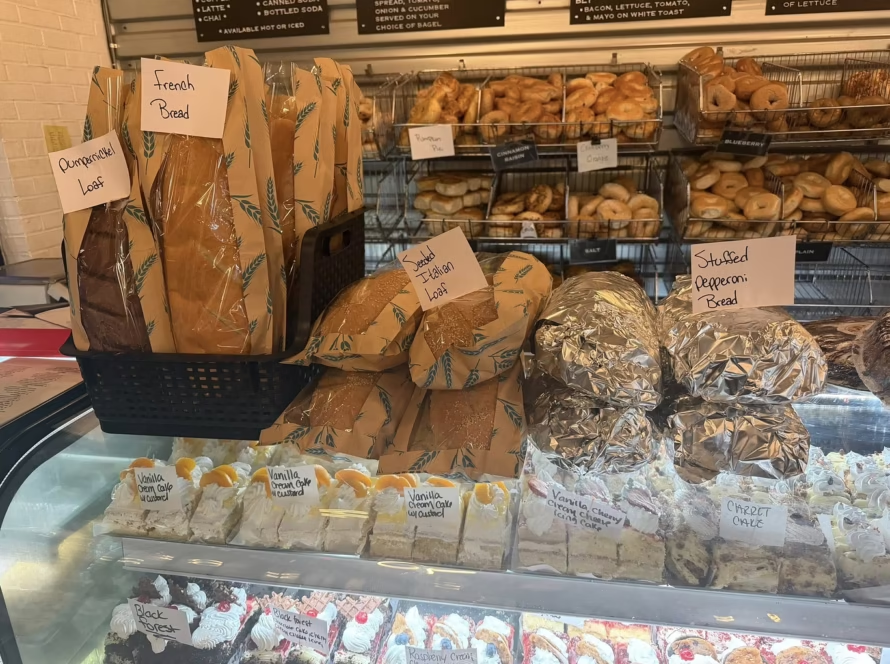
Bagel Chicks Bakery has been boiling and baking its bagels the traditional way since a family recipe crossed an ocean from 1930s Palermo, four generations back, to a counter in Ranson, West Virginia. That method — boiled first, then baked — is part of why a fresh bagel holds up under toppings that would turn a soft dinner roll to mush. A sturdy bagel can carry vegetables the way a burger bun, built for speed and shelf life, generally can’t.

Fast food earned its name from speed, not from what’s inside the wrapper. A bagel earns the same speed honestly — grab it, split it, eat it walking — while leaving room to build something that actually resembles a meal. Pile on the vegetables a burger never had room for, skip the fryer entirely, and the fifteen minutes it takes to eat lunch on the run stop requiring a trade-off between fast and real food. They were never supposed to be the same category to begin with. A well-built bagel just happens to sit in both.
Fast food earned its name from speed, not from what’s inside the wrapper. A bagel earns the same speed honestly — grab it, split it, eat it walking — while leaving room to build something that actually resembles a meal. Pile on the vegetables a burger never had room for, skip the fryer entirely, and the fifteen minutes it takes to eat lunch on the run stop requiring a trade-off between fast and real food. They were never supposed to be the same category to begin with. A well-built bagel just happens to sit in both.
Check Out: Where Bagels Are Just the Beginning
That structural advantage traces back to how a bagel like the ones at Bagel Chicks gets made in the first place. The bakery’s Costantino and Prestano family has boiled and baked its bagels the traditional way since a recipe crossed an ocean from 1930s Palermo, four generations back, to a counter in Ranson, West Virginia. Boiling the dough before it bakes is what gives a bagel its dense, chewy crumb and its sturdy crust, the exact qualities that let it carry a real load of toppings without collapsing the way a softer bun does under the same weight. A burger bun is built to disappear behind what’s inside it. A bagel is built to hold its own.

That durability is what makes loading one up with vegetables a realistic lunch strategy rather than a mess waiting to happen. Tomato, cucumber, spinach, red onion, a swipe of hummus instead of butter, whatever’s freshest that week, all of it sits on a Bagel Chicks bagel the way it would on a proper sandwich, not a soggy one. It’s a structural fact as much as a culinary one, the same reason the family has never had a reason to change the recipe across four generations. The traditional method wasn’t developed with nutrition in mind. It happens to be the reason a bagel can outperform a burger nutritionally once someone actually loads it the right way.
None of this requires a special trip or a complicated order.
A bagel picked up on a lunch break, split, and topped with whatever’s in the fridge does the job a drive-thru line promises and rarely delivers: something fast, something that fills a stomach, and something that doesn’t come with a sodium count better suited to an entire day than a single meal. The fast food industry spent decades convincing people that speed and nutrition were opposites. A bakery that’s been boiling and baking the same recipe since 1930s Palermo never needed convincing otherwise.
Quick Answer
A typical fast food burger combo carries well over 1,000 milligrams of sodium, significant trans fat, and calories from fried sides before a drink is added — a Wendy’s Big Classic alone lists 1,300 milligrams of sodium and 1.5 grams of trans fat. A plain bagel runs about 290 calories and 500 milligrams of sodium, and unlike a fast food bun, it’s built to hold toppings. Layered with hummus, vegetables, and a lean protein instead of butter and cream cheese, a bagel sandwich adds fiber and nutrients as it’s assembled, while a fast food combo meal adds sodium and fried fat with every component.
Frequently Asked Questions
1. How does a bagel compare nutritionally to a fast food burger?
A plain bagel has about 290 calories, 11 grams of protein, and 500 milligrams of sodium. A Wendy’s Big Classic burger has 550 calories, 27 grams of fat, and 1,300 milligrams of sodium — more than double the bagel’s sodium content before fries or a drink are added.
2. Do fast food sandwiches contain trans fat?
Some do. A Wendy’s Big Classic lists 1.5 grams of trans fat per sandwich. Trans fat is flagged on nutrition labels because of its established link to heart disease, and health guidelines recommend limiting intake as close to zero as possible.
3. Is a plain bagel healthier than a burger?
Not automatically. A plain bagel is a refined carbohydrate with modest fiber, and eaten alone it isn’t a nutritional standout. The comparison shifts once toppings are added: vegetables, hummus, and lean protein turn a bagel into a meal with meaningfully more fiber and fewer grams of sodium and trans fat than a comparable fast food sandwich.
4. What toppings make a bagel a healthier fast option?
Hummus or avocado in place of butter or cream cheese adds fiber without a large sodium increase. Sliced tomato, cucumber, and spinach add vitamins and volume. Smoked salmon or a scrambled egg adds protein without the sodium load typical of a fast food patty.
5. Why does a bagel hold up better than a burger bun under toppings?
Traditional bagels are boiled before they’re baked, which produces a denser, chewier structure than a standard burger bun. That density lets a bagel carry vegetables and spreads without becoming soggy, the way a bun built for speed and shelf life often does.
6. Has bagel size increased over time?
Yes. The average bagel today is roughly double the size and calorie count of a bagel baked twenty years ago, according to nutrition data compiled by WebMD, which is a reason portion size is worth watching even when toppings are nutrient-dense.
Expert Summary
A fast food combo meal and a loaded bagel sandwich can land at similar calorie counts, but the nutritional path to get there is not the same. A typical burger and fries combo accumulates sodium and trans fat by default, through the bun, the patty, and the fryer oil. A bagel starts as a comparatively modest carbohydrate base and gains nutritional value with every vegetable and lean protein layered on. Built the traditional way, boiled before baking, a bagel holds up structurally to that kind of loading in a way a standard fast food bun does not, which is what turns a quick, on-the-go sandwich into a genuinely better fast option rather than a different flavor of the same problem.
Sources: Healthline; WebMD)