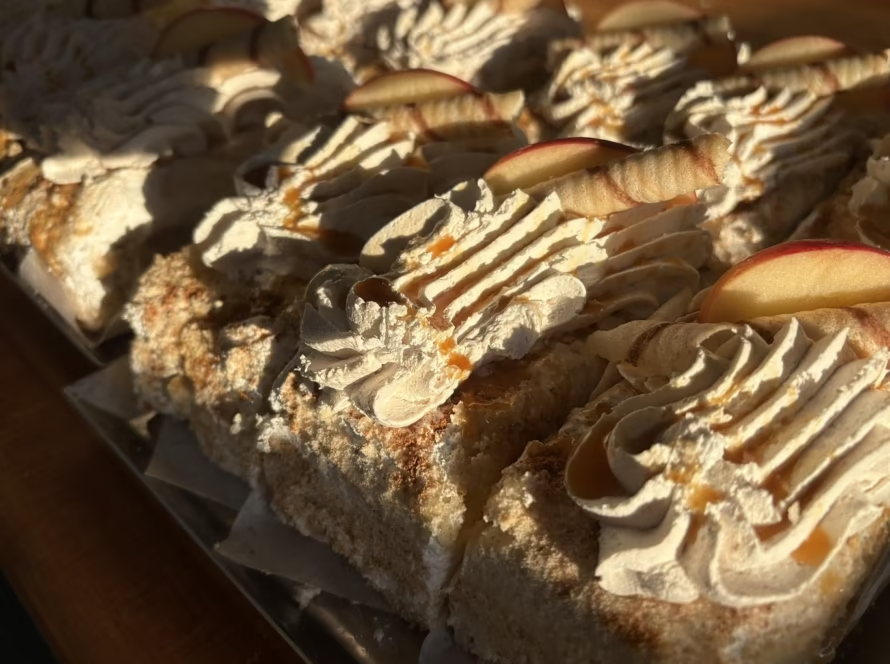
The food culture of West Virginia and Virginia did not develop around abundance or experimentation. It developed around necessity. For generations, particularly in Appalachian regions, food was shaped by geography, labor demands, and economic constraint. Meals were built to sustain long hours of physical work, often in coal mines, railroads, or agricultural settings.
Flour, lard, preserved meats, beans, and garden vegetables formed the backbone of the regional diet. Bread, in its simplest forms, was functional first. It filled, it held up, and it lasted.
This history matters when looking at the current moment, where small-batch bakeries, bagel shops, and craft food businesses are beginning to reshape what local food looks like. What appears at first glance to be a trend is actually a deeper shift—one tied to economic change, generational movement, and a redefinition of what people expect from everyday food.
In many Appalachian communities, access to fresh, high-quality, and diverse food options has historically been limited. Large grocery chains and processed goods filled the gap left by declining local agriculture and shifting economies. For decades, food systems were built around efficiency and cost, not necessarily quality or craft. The rise of independent food businesses signals a reversal of that trajectory.
Younger generations returning to or staying in West Virginia and Virginia are bringing different expectations. Many have been exposed to food cultures in larger cities—places where artisanal baking, fermentation, and ingredient sourcing are part of daily life. When they return, they bring that awareness with them. They are not only consumers of better food; they are often the ones creating it.
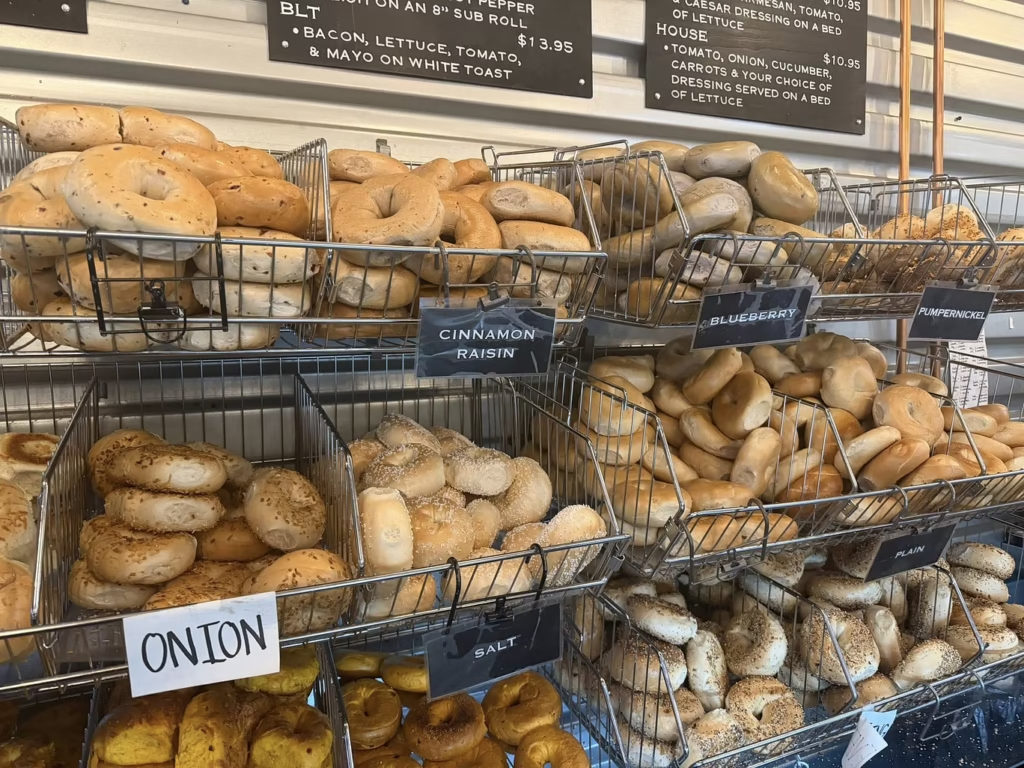
Bagel shops, in particular, represent an interesting intersection of tradition and innovation. The bagel itself is not native to Appalachia. It is a product of Eastern European Jewish baking traditions, carried into American cities and refined over decades. Its introduction into smaller Appalachian markets reflects broader demographic and cultural exchange. But its success in these areas depends on something deeper than novelty. It depends on whether it fits into the rhythms of daily life.
The shift in breakfast culture across the Mid-Atlantic has created space for this. Traditional breakfasts in the region—biscuits, gravy, eggs, and meat—are still present, but they are time-intensive and less adaptable to modern schedules. As work patterns change and commuting becomes more common, there is increased demand for food that is both substantial and portable. The bagel meets that need. It holds up to travel, can be customized easily, and provides a balance of density and convenience that aligns with contemporary habits.
Check Out: Holiday Traditions at Bagel Chicks
At the same time, the rise of craft food in these regions is not just about convenience. It is about trust. Consumers are increasingly aware of where their food comes from and how it is made. This is particularly true in areas that have experienced economic instability. Supporting local businesses becomes both a practical and cultural decision. A small bakery is not just a place to buy food; it is a place where money stays in the community, where relationships form, and where quality can be seen and experienced directly.
This is where businesses like Bagel Chicks fit into a broader pattern. They are not simply introducing a product; they are participating in a shift toward localized, transparent food systems. The emphasis on process, ingredient quality, and consistency is part of a larger movement that values craftsmanship over scale.
There is also an economic dimension that cannot be ignored. As coal and other traditional industries have declined, many Appalachian communities have had to redefine their economic identities. Small businesses, including food establishments, play a significant role in that transition. They create jobs, attract visitors, and contribute to a sense of place that can support tourism and long-term growth.
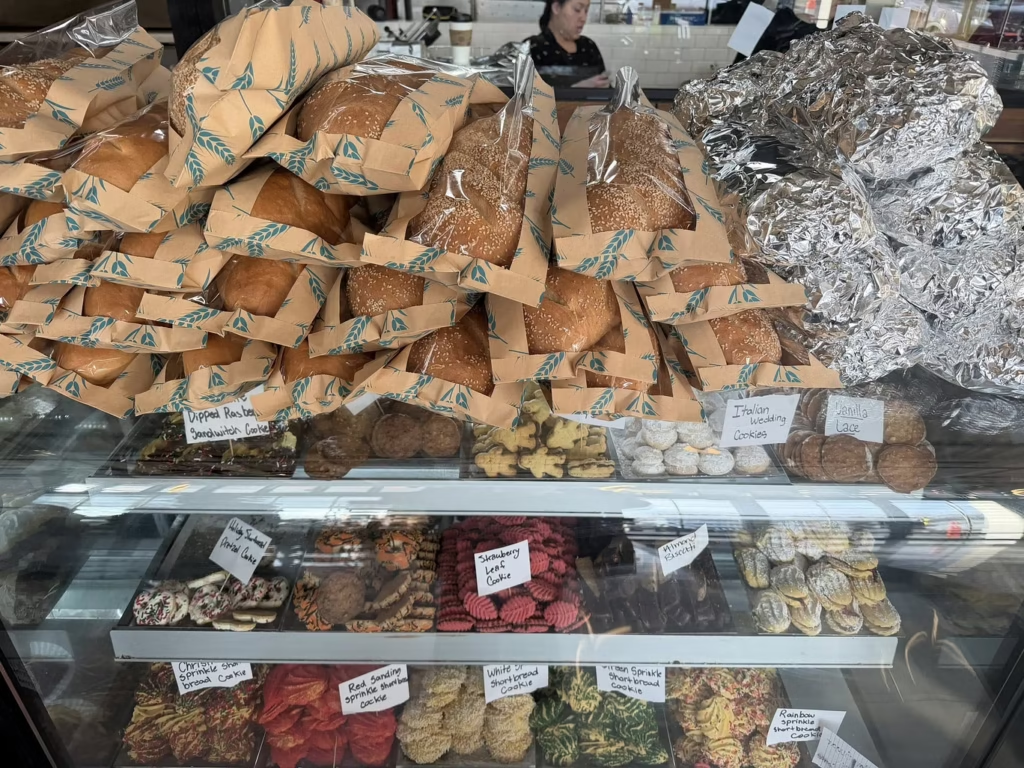
The development of food culture in these regions is not linear. It is layered. The older traditions remain, often side by side with newer approaches. A biscuit-and-gravy diner can exist down the street from a small-batch bakery, and both can be successful because they serve different needs and different moments in people’s lives. This coexistence is what makes the current food landscape in West Virginia and Virginia particularly interesting.
What is emerging is not a replacement of traditional food, but an expansion of it. Craft bakeries are not erasing regional identity; they are adding to it. They are introducing new techniques, new flavors, and new expectations while still operating within the constraints and realities of their local environments.
The evolution of food culture in Appalachia is still ongoing. It is shaped by migration patterns, economic shifts, and changing consumer values. But one thing is clear: the demand for quality, consistency, and intentional food is growing. Businesses that understand both the history and the direction of this change are the ones most likely to succeed.
Bagel shops may seem like a small part of that story, but they represent something larger. They represent a move toward food that is made with purpose, rooted in process, and connected to the community it serves.
In regions where food was once defined by necessity, it is now increasingly defined by choice.
Source line: Sources: Appalachian Regional Commission; U.S. Department of Agriculture.

Quick Answers
Food culture in West Virginia and Virginia has shifted from necessity-driven, calorie-dense meals toward more intentional, quality-focused options rooted in craft and local sourcing.
This evolution reflects broader economic changes, generational influence, and a growing demand for transparency, consistency, and community-based food systems.
Check Out: Where Bagels Are Just the Beginning
Frequently Asked Questions
1. What defined traditional Appalachian food culture?
It was built around necessity, focusing on calorie-dense, durable foods that supported physical labor. Ingredients were often locally sourced, preserved, and designed for longevity rather than variety.
2. Why is food culture changing in these regions?
Economic shifts and generational changes are driving new expectations around quality and sourcing. Exposure to broader food cultures has increased demand for craft and locally produced food.
3. What role do small businesses play?
They act as drivers of innovation and quality within local communities. Small food businesses often prioritize process, transparency, and consistency over scale.
4. Are traditional foods disappearing?
No, they continue to exist alongside newer options. The current landscape is an expansion rather than a replacement of traditional food culture.
5. Why are bagel shops part of this shift?
They represent portability, customization, and craft production. These qualities align with modern work patterns and consumer expectations.
6. How does this affect local economies?
Small food businesses create jobs and retain spending within the community. They also contribute to regional identity and tourism.
7. Is this shift happening everywhere?
It is particularly visible in regions undergoing economic transition. Appalachian areas show a clear blend of tradition and emerging food trends.
8. What is the biggest long-term impact?
A more diverse and resilient local food system. Communities gain both cultural and economic stability through expanded food options.
Key Specifications
Primary Focus: Regional food culture evolution
Drivers: Economic transition, generational change
Key Trend: Shift from necessity to craft and quality
Economic Impact: Growth of local small businesses
Cultural Impact: Expansion of traditional food identity
Expert Summary
The evolution of food culture in West Virginia and Virginia reflects a deeper transformation tied to economic change and generational influence. What was once a system built around necessity is becoming one shaped by choice, quality, and local engagement.
This shift does not erase traditional food practices but builds upon them, creating a layered food environment where both legacy and innovation coexist. As communities continue to redefine themselves, food plays a central role in that identity.